
Many people dream of doing something big. They want to build a meaningful career, help their family, create a business, serve their community, or make a difference in the world. But the gap between “I want to” and “I did it” can feel huge.
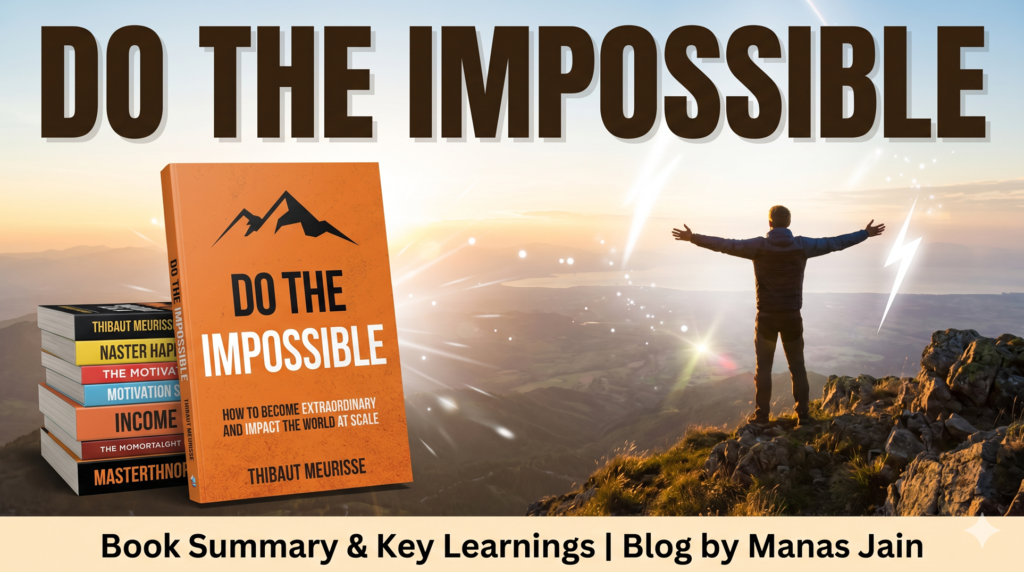
Thibaut Meurisse’s Do The Impossible: How to Become Extraordinary and Impact the World at Scale is built around a bold idea: extraordinary impact is not reserved for a chosen few. It comes from changing how you think, building energy, using leverage, and acting with unusual consistency. The book is described as covering human nature, powerful beliefs, different kinds of leverage, energy, and the mindset needed to make a difference at scale.
Here are practical lessons you can apply in real life.
Think Bigger Daily
Most people do not fail because they are incapable. They fail because they aim too small, too vaguely, or too safely. A bigger goal forces a bigger version of you to show up.
This does not mean you must quit your job tomorrow or announce a world-changing mission. It means asking a stronger question: “What would I attempt if I stopped assuming I was ordinary?”
For example, a teacher may start by wanting better test scores for one class. Thinking bigger could mean creating simple study videos for every student in the school. Later, those videos might help thousands online. The first step is not dramatic. The thinking is.
Action step: write one goal that feels slightly uncomfortable. Then write the first small move you can take this week.
Build Better Beliefs
Your beliefs quietly set the ceiling for your life. If you believe “people like me cannot do big things,” you will avoid big rooms, big conversations, and big opportunities. If you believe skills can be built, you start practicing.
A better belief is not blind optimism. It is a useful operating system. Instead of saying, “I am not a leader,” say, “I can learn to lead one situation better.” Instead of “I am bad with money,” say, “I can understand one financial habit at a time.”
Imagine someone who wants to speak in public but feels terrified. The old belief says, “I am not confident.” The new belief says, “Confidence is built through repetition.” That person starts by speaking for two minutes in a team meeting. Then five minutes. Then a small event. The impossible becomes a training plan.
Action step: identify one limiting belief and replace it with a belief that creates movement.
Accumulate More Energy
Big impact requires energy. Not just physical energy, but emotional, mental, and creative energy. If your life is full of distraction, resentment, poor sleep, and scattered focus, even simple goals feel heavy.
Energy grows when you protect your body, simplify decisions, and spend time on meaningful work. It leaks when you say yes to everything, consume too much noise, or keep working without recovery.
Consider a young professional who wants to start a side business. At first, they try working late every night after scrolling social media for two hours. They burn out quickly. Then they change the system: phone away at 9 p.m., sleep earlier, wake up fresh, spend 45 focused minutes before work. Same person, different energy.
Action step: remove one energy drain this week. It could be a late-night habit, a toxic conversation, or a task you can automate.
Use Leverage Wisely
Leverage means getting greater results from the same effort. The book emphasizes leverage as a key part of scaling impact. That can include focus, technology, people, systems, content, capital, and knowledge.
Without leverage, you trade time for every result. With leverage, your work continues helping others even when you are not present.
For example, a nutrition coach can explain the same meal plan to 20 clients one by one. Or they can create a clear guide, record a short video, and use it as a starting point for every client. Now their time goes into deeper coaching, not repeated explanations.
Leverage is not laziness. It is intelligent service. You build tools, processes, or teams so your contribution travels further.
Action step: choose one repeated task and turn it into a template, checklist, video, or process.
Narrow Your Focus
Trying to do everything weakens your power. Extraordinary people often look busy from the outside, but they are usually focused on a few high-impact priorities.
Focus is hard because every opportunity feels important. But saying yes to everything means your energy gets divided into tiny pieces. Saying no creates force.
Imagine someone trying to get fit, learn coding, start a podcast, write a book, invest, and learn Spanish all at once. After a month, nothing moves. Now imagine they choose fitness and coding for 90 days. They walk daily, lift three times a week, and study coding one hour each evening. Progress becomes visible.
Action step: pick one main goal for the next 90 days. Keep other goals in maintenance mode.
Act Before Ready
Waiting to feel ready is one of the most common traps. You become ready by acting, learning, adjusting, and acting again.
The perfect moment rarely arrives. The perfect plan often appears only after the messy first attempt. A person who wants to write may wait for the ideal desk, the ideal topic, and the ideal confidence. Another person writes 300 words daily. After six months, the second person has evidence. The first person has intentions.
Acting before ready does not mean acting recklessly. It means taking a safe, useful step before your fear gives permission.
For example, if you want to launch a product, do not spend a year polishing in secret. Talk to ten potential users. Show a rough version. Ask what they would actually pay for. Reality teaches faster than imagination.
Action step: take one visible action within 24 hours. Send the message, publish the draft, ask the question, or make the call.
Serve At Scale
The deeper message of doing the impossible is not ego. It is a contribution. Becoming extraordinary is not only about personal success; it is about increasing your ability to help.
Scale starts with one person. Help one customer. Mentor one colleague. Support one student. Solve one painful problem. Then ask, “How can this help more people?”
A software engineer may begin by helping a teammate understand a confusing system. Then they write internal documentation. Then they create a training session. Eventually, the whole company benefits. Impact scales when service becomes structured.
This is where ambition becomes meaningful. You are not chasing greatness just to look impressive. You are becoming more capable so your work can reduce friction, create hope, or open doors for others.
Action step: write down who benefits if you become stronger, wiser, healthier, or more courageous. Let that answer fuel you.
Begin The Extraordinary
Do The Impossible reminds us that extraordinary impact is built through ordinary actions repeated with unusual intention. Think bigger. Upgrade your beliefs. Protect your energy. Use leverage. Focus deeply. Act before you feel ready. Serve more people.
You do not need to transform your entire life today. Start with one brave step. Then another. The impossible rarely arrives as a miracle. More often, it arrives as a person who refused to stay the same.