
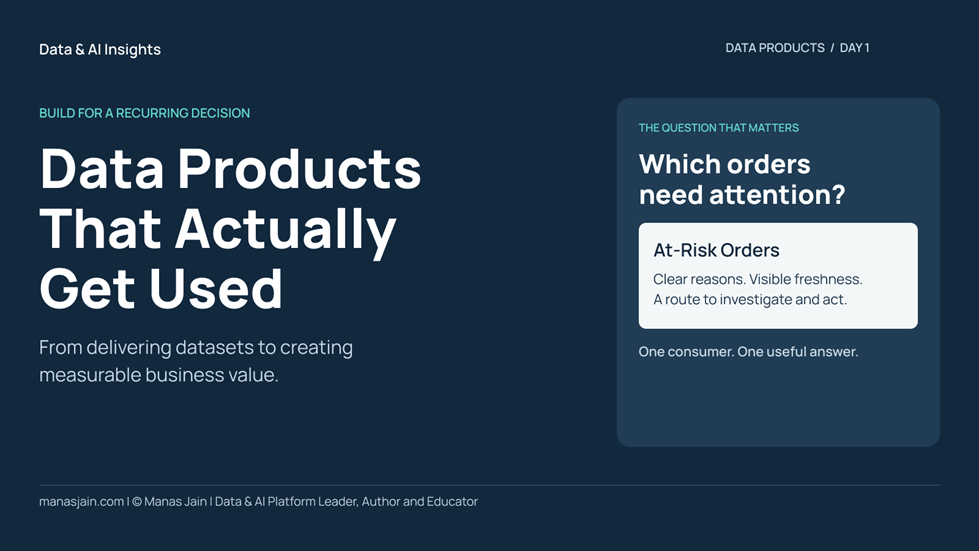
Data Products That Actually Get Used
A practical guide to designing data products around a recurring decision, with a worked At-Risk Orders brief, operating choices, and measures of usefulness.
Data Products That Actually Get Used Read More »

A practical guide to designing data products around a recurring decision, with a worked At-Risk Orders brief, operating choices, and measures of usefulness.
Data Products That Actually Get Used Read More »
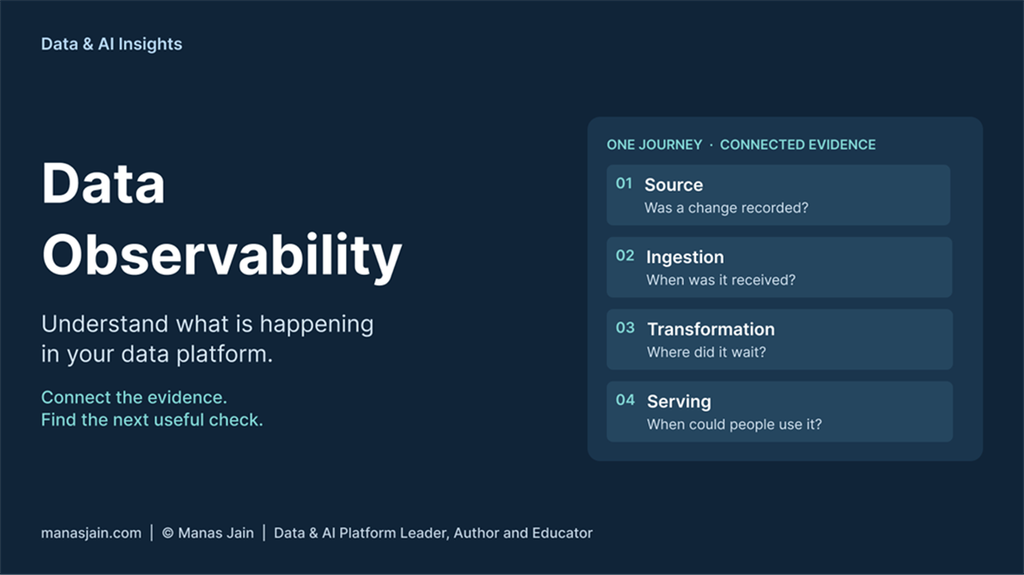
Data observability helps teams connect evidence across a data journey. Follow a fictional inventory update to locate a delay, separate facts from hypotheses, understand consumer impact, and build a minimum useful observability plan.
Data Observability Understanding What Is Happening in Your Data Platform Read More »
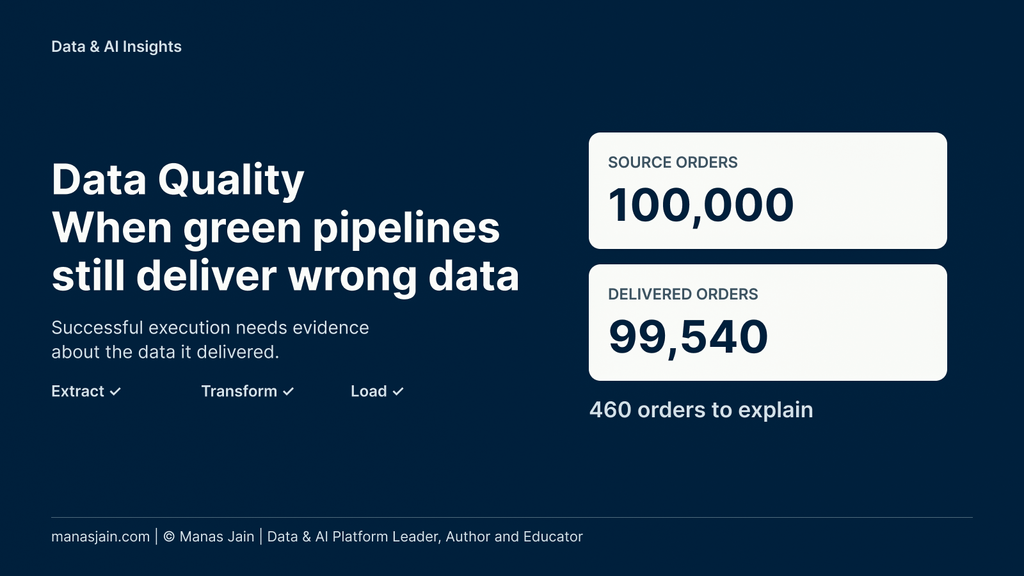
A successful pipeline can still deliver incomplete, inaccurate, or late data. This practical guide explains how to detect quality problems, define useful expectations, reconcile missing records, assign responsibility, and prevent recurring failures.
Data Quality: When Green Pipelines Still Deliver Wrong Data Read More »
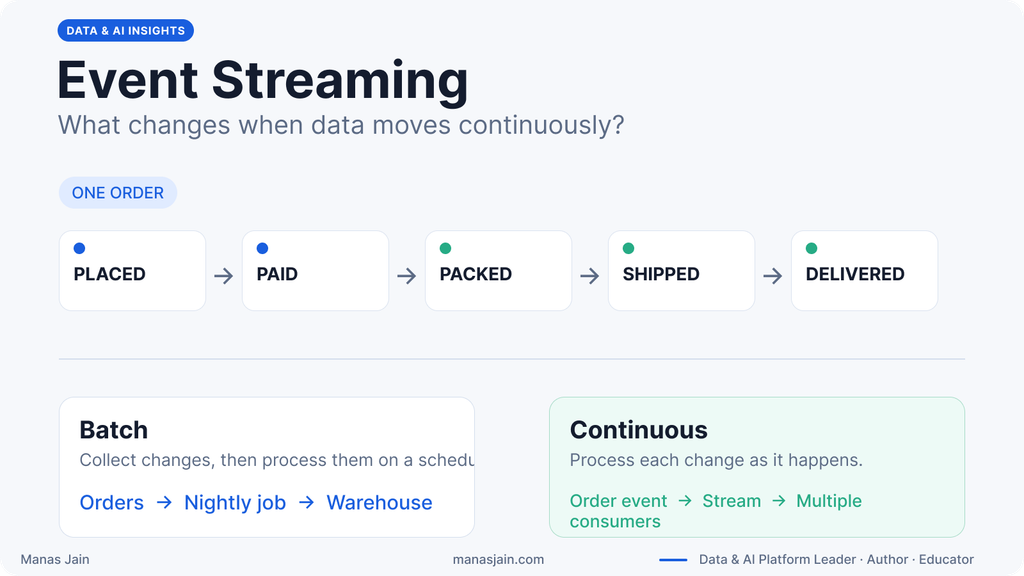
What really changes when data no longer waits for the nightly batch? Using a simple order lifecycle, this article explains batch processing, Change Data Capture (CDC), business events, and event streaming—then looks at where continuous data helps, where it adds complexity, and how to decide when fresher data is actually worth it.
Event Streaming: What Changes When Data Moves Continuously? Read More »
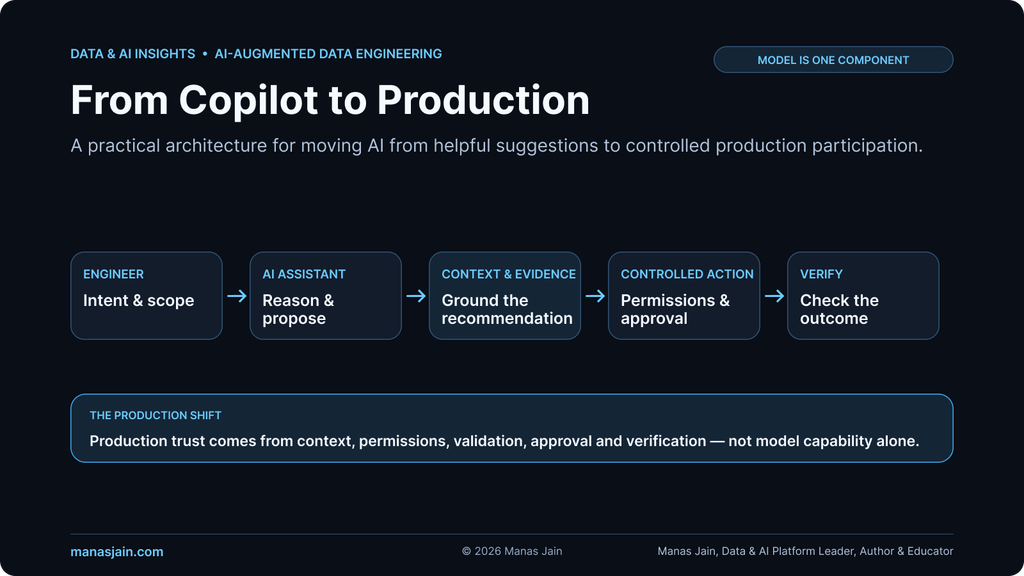
Moving an AI assistant from code generation into production requires much more than a capable model. This practical AI-Augmented Data Engineering architecture shows how context, tools, permissions, validation, approvals and verification fit together.
From Copilot to Production: A Practical Architecture for AI-Augmented Data Engineering Read More »
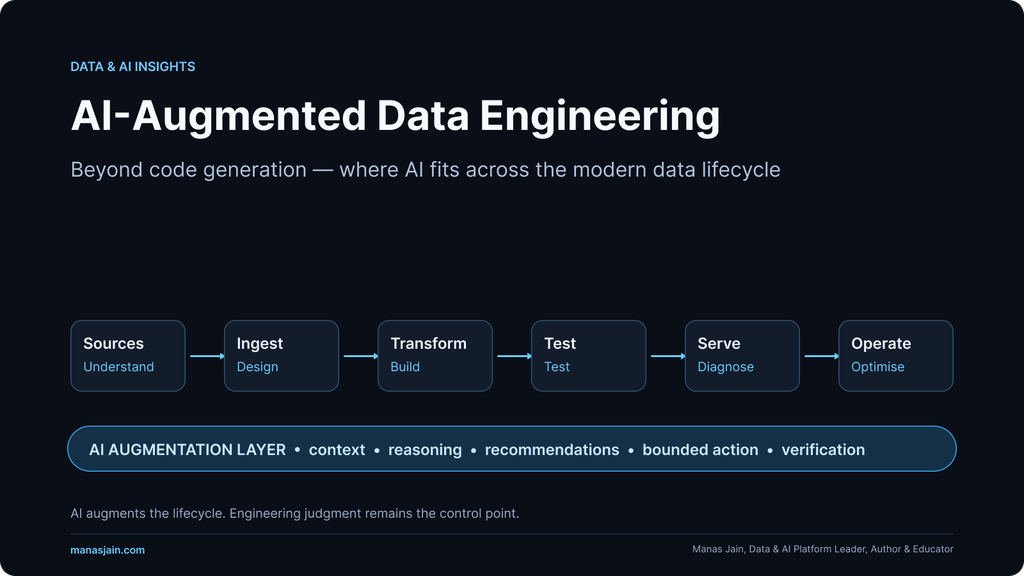
AI-Augmented Data Engineering is about much more than generating SQL. The real opportunity is using AI to help engineers understand systems, design changes, troubleshoot failures, validate outcomes, and operate data platforms—while keeping context, engineering judgment, and appropriate controls at the center.
AI-Augmented Data Engineering: Beyond Code Generation Read More »
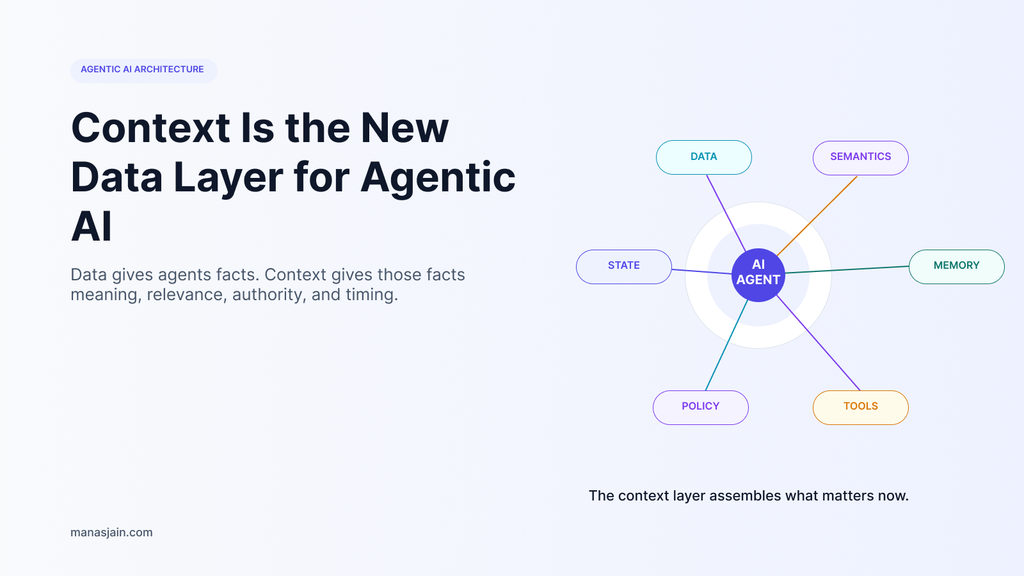
Agentic AI needs more than access to data—it needs the right context at the right moment. This article explores why the context layer for agentic AI is becoming a critical enterprise architecture capability, combining semantics, memory, governance, tools, permissions, and runtime state to enable reliable, decision-ready AI agents.
Context Is the New Data Layer for Agentic AI Read More »
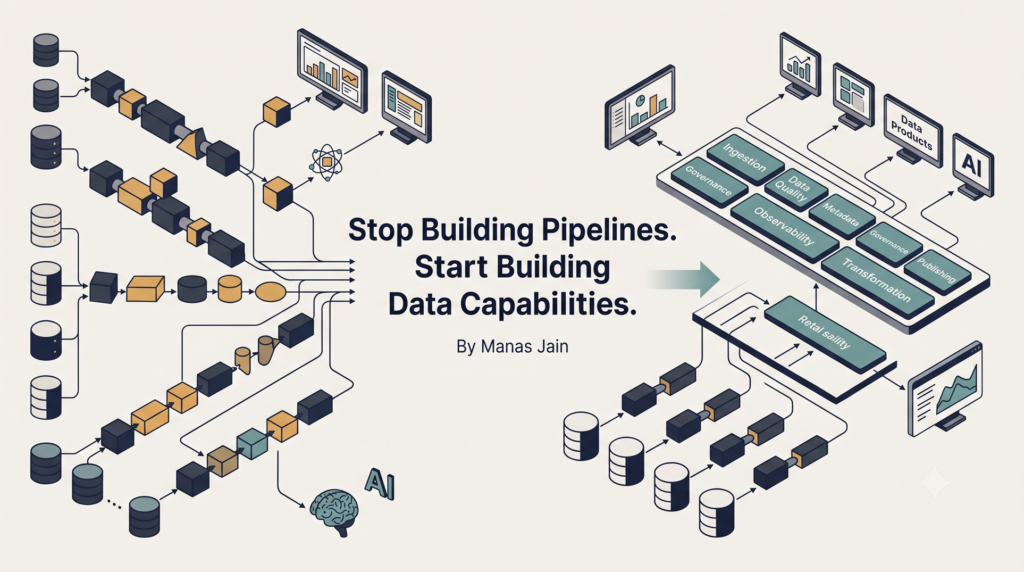
Data teams often rebuild the same ingestion, quality, governance, and monitoring foundations for every new pipeline. This practical guide shows how to replace repeated engineering with reusable data capabilities, standardize outcomes without restricting teams, and prove the approach through a focused 30–60–90 day implementation plan.
Stop Building Pipelines. Start Building Data Capabilities. Read More »
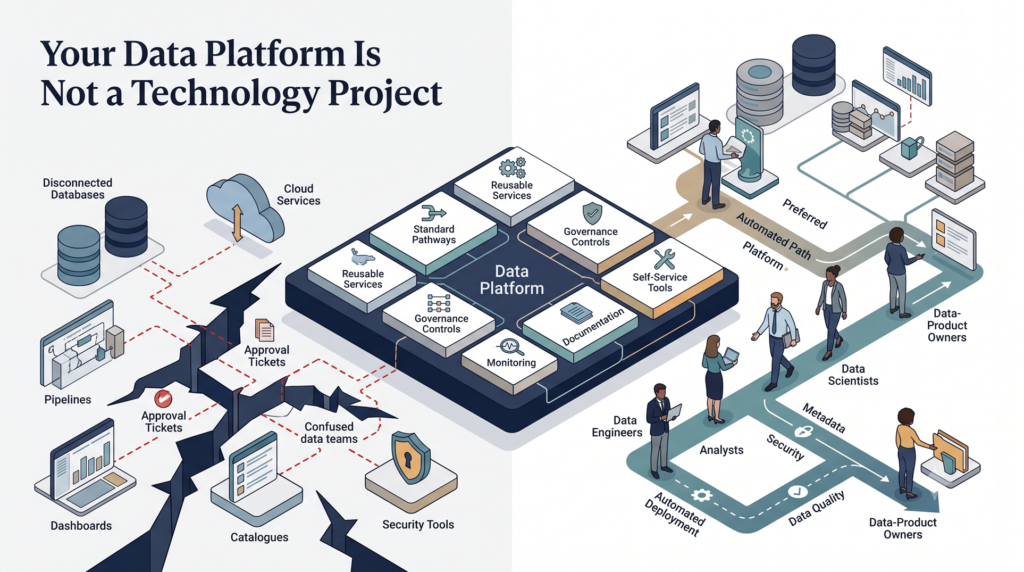
A modern data stack does not automatically create a modern data platform. This article explains how data leaders can reduce delivery friction, build practical paved paths, embed governance, clarify ownership, and measure real adoption. It also provides a focused 90-day plan for turning disconnected technologies into a platform that teams can use effectively.
Your Data Platform Is Not a Technology Project. Read More »
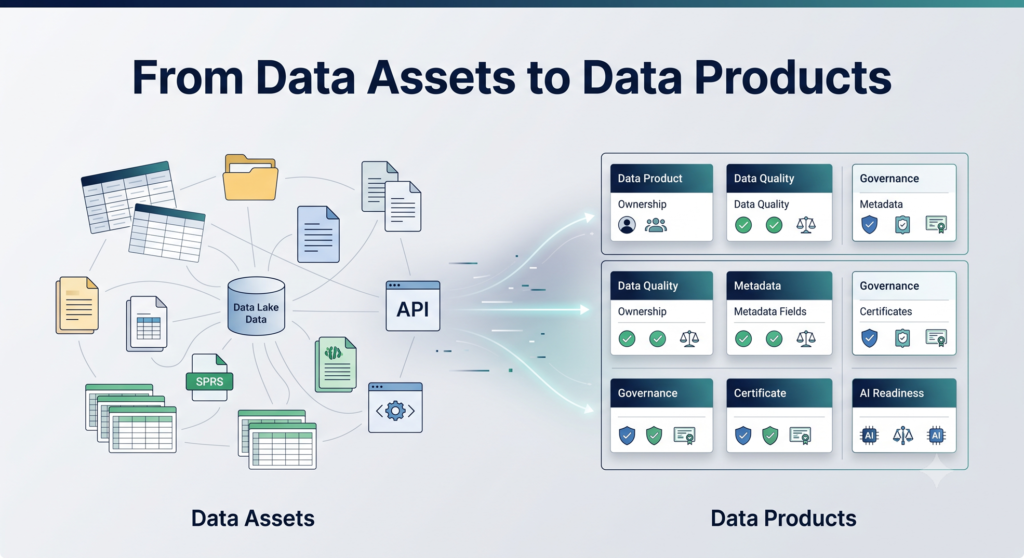
Most organizations do not lack data. They lack trusted, reusable data products. This blog explains how to move from scattered data assets to governed, owned, quality-managed data products that support analytics, AI, and better business decisions. It includes practical steps, common mistakes, and a 30-60-90-day action plan for data leaders.
From Data Assets to Data Products Read More »