
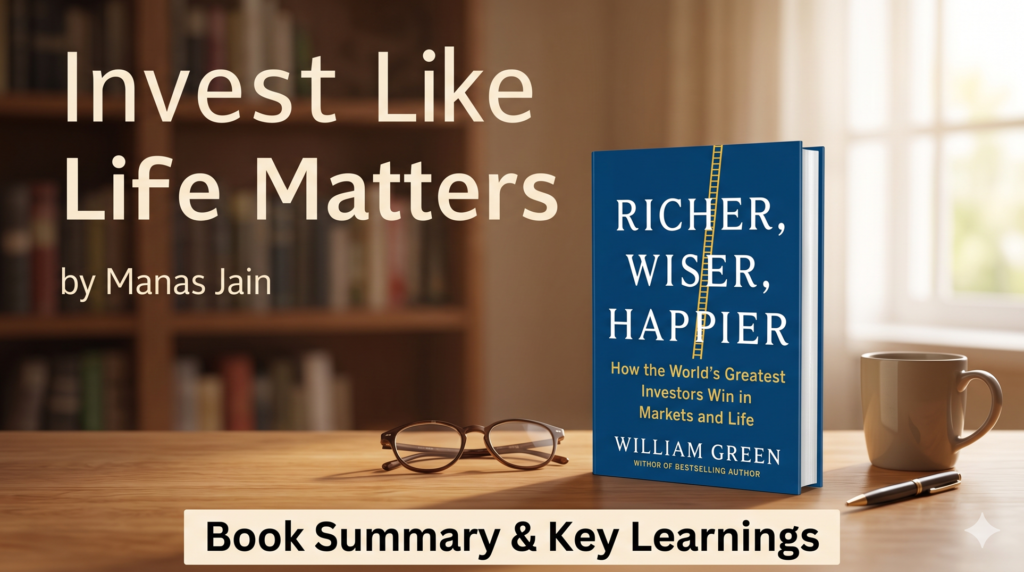
William Green’s Richer, Wiser, Happier is not just a book about investing. It is a book about how to think, behave, and live with greater wisdom. Through conversations with some of the world’s greatest investors, Green shows that lasting success rarely comes from flashy predictions, frantic activity, or chasing the crowd. It comes from patience, humility, discipline, learning, and emotional control.
The most powerful idea in the book is simple: the habits that help great investors win in markets can also help ordinary people live better lives. You do not need to manage billions of dollars to benefit from these lessons. You can apply them to your career, relationships, health, money, and daily decisions.
Here are seven practical lessons from the book that can make you not only richer, but wiser and happier too.
Think Long Term
Great investors do not obsess over every market movement. They understand that real wealth is built over years and decades. They let compounding do its quiet magic.
The same is true in life. Big results usually come from small actions repeated consistently.
For example, imagine someone who reads ten pages every night instead of scrolling endlessly on their phone. That does not sound dramatic. But over a year, they may finish twenty or thirty books. Over ten years, they become a very different person.
The action step is clear: choose one area of life where you want compounding to work for you. Save a small amount monthly. Exercise three times a week. Learn one useful skill for thirty minutes a day. Do not demand instant results. Build slowly, and let time become your partner.
Protect Your Downside
Many great investors are obsessed with avoiding permanent loss. They know that survival matters. If you avoid disaster, you give yourself more chances to win.
This applies beautifully to everyday life. You do not need to take reckless risks to prove ambition. You need a strong foundation.
For example, before switching careers, a thoughtful person might build an emergency fund, test the new field through freelance work, and speak with people already doing the job. That does not mean they are afraid. It means they are intelligent.
In your own life, ask: “What could seriously hurt me here?” Before making a major financial decision, signing a contract, taking a loan, or joining a business, pause. Read carefully. Ask for advice. Sleep on it. The goal is not to avoid risk completely. The goal is to avoid risks that can damage your future.
Copy Proven Wisdom
One refreshing lesson from Green’s book is that many great investors are shameless learners. They study successful people. They borrow ideas. They “clone” what works, then adapt it to their own style.
This is not mindless copying. It is intelligent learning.
For example, say you admire a colleague who is calm, respected, and productive. Instead of feeling jealous, study them. How do they manage meetings? How do they write emails? How do they prepare before presentations? You can copy their best habits and make them your own.
The action step is simple: build your personal “wisdom library.” Pick people who are excellent in areas you care about. One person may be great with money. Another may be great at parenting. Another may manage stress well. Learn from them. Success leaves clues.
Master Your Temperament
In investing, intelligence matters. But temperament often matters more. The best investors stay calm when others panic. They do not let fear or greed control them.
This is a huge life lesson. Many bad decisions are not caused by lack of knowledge. They are caused by emotional storms.
For example, someone may know they should not send an angry message to a friend or coworker. But in the heat of the moment, they hit send. Later, they regret it. A wiser approach is to pause, breathe, and wait until emotions cool.
Try creating a personal rule: never make a major decision when you are angry, exhausted, jealous, or afraid. Give yourself time. Go for a walk. Write your thoughts down. Speak to someone calm. Good temperament is not about having no emotions. It is about not letting emotions drive the car.
Keep Life Simple
Many of the investors in Green’s book value simplicity. They avoid unnecessary complexity because complexity often hides danger. Simple principles, followed consistently, can be incredibly powerful.
This matters in personal life too. We often make things harder than they need to be. We set too many goals, buy too many things, join too many groups, and say yes too often.
For example, a person trying to get healthy may follow a complicated diet for two weeks and quit. A simpler plan may work better: eat more whole foods, reduce sugary snacks, walk daily, and sleep on time. Simple is easier to repeat. Repetition wins.
Look at your routines. Where can you simplify? Can you reduce subscriptions, automate savings, clean your workspace, or focus on three important tasks per day? Simplicity creates energy. It gives your mind room to breathe.
Choose Quality People
Great investors look for quality businesses with trustworthy leaders. They care deeply about character. Over time, bad people and bad incentives create bad outcomes.
The same rule applies to your personal world. The people around you shape your thinking, habits, confidence, and peace.
For example, if your friends constantly mock ambition, overspend, gossip, or complain, it becomes harder to grow. But if you spend time with people who are disciplined, honest, curious, and kind, you naturally rise.
This does not mean abandoning everyone who struggles. It means being intentional. Choose mentors, friends, partners, and colleagues with values you respect. Ask yourself: “Do I become better or worse around this person?” That question can change your life.
Define True Wealth
Perhaps the deepest message of Richer, Wiser, Happier is that money is not the final goal. The greatest investors Green profiles often care about freedom, relationships, purpose, health, learning, and contribution.
Money is useful. It can reduce stress and create options. But money without wisdom can still lead to anxiety, loneliness, and emptiness.
For example, imagine someone who earns a high salary but never sees their family, neglects their health, and feels constantly rushed. Are they truly wealthy? Now imagine someone with enough money, meaningful work, strong relationships, and time to think. That person may be far richer in the way that matters most.
Write your own definition of wealth. Include money, but do not stop there. Add health, freedom, love, faith, creativity, service, or whatever matters deeply to you. Then check whether your daily choices match that definition.
Wisdom Builds Wealth
Richer, Wiser, Happier reminds us that investing is not just about numbers. It is about judgment. It is about patience. It is about controlling yourself when the world gets noisy. And most importantly, it is about building a life that feels meaningful, not merely successful.
Start small. Pick one lesson from this list and apply it today. Save before spending. Pause before reacting. Study someone wise. Simplify one routine. Spend time with better people. Define what “rich” really means to you.
The best investment may not be a stock, a fund, or a business. It may be the person you become.