

What does it take to become exceptional in your field? The myth of innate talent has long shaped how we view success, but research has consistently proven otherwise: experts are made, not born. This blog delves into the transformative power of deliberate practice, illustrating how anyone can achieve greatness through systematic effort, persistence, and a willingness to learn from failure.
The Polgár Experiment: A Lesson in Potential
In the 1980s, Hungarian educators László and Klara Polgár embarked on a groundbreaking educational experiment. They aimed to disprove the notion that only innate talent could drive success in intellectually demanding fields like chess. Homeschooling their three daughters, the Polgárs integrated chess into their curriculum at an early age. Their efforts yielded extraordinary results. By 2000, all three daughters were ranked among the world’s top ten female chess players, and the youngest, Judit Polgár, became a chess grandmaster at 15, breaking Bobby Fischer’s record.
This experiment was not an anomaly. It underscored a critical truth supported by decades of research: success is rooted in intensive practice, expert guidance, and unwavering family support.
Debunking the Genius Myth
In his seminal work, Developing Talent in Young People, Benjamin Bloom analyzed the childhoods of 120 elite performers across disciplines such as music, mathematics, and neurology. Surprisingly, Bloom found no early indicators of innate genius among these individuals. Instead, their exceptional achievements were attributed to consistent practice, dedicated mentorship, and the relentless pursuit of improvement.
Contrary to popular belief, even IQ does not significantly correlate with expert performance in fields like chess, music, or medicine. The science is clear: deliberate practice—not innate ability—is the foundation of excellence.
What Is Deliberate Practice?
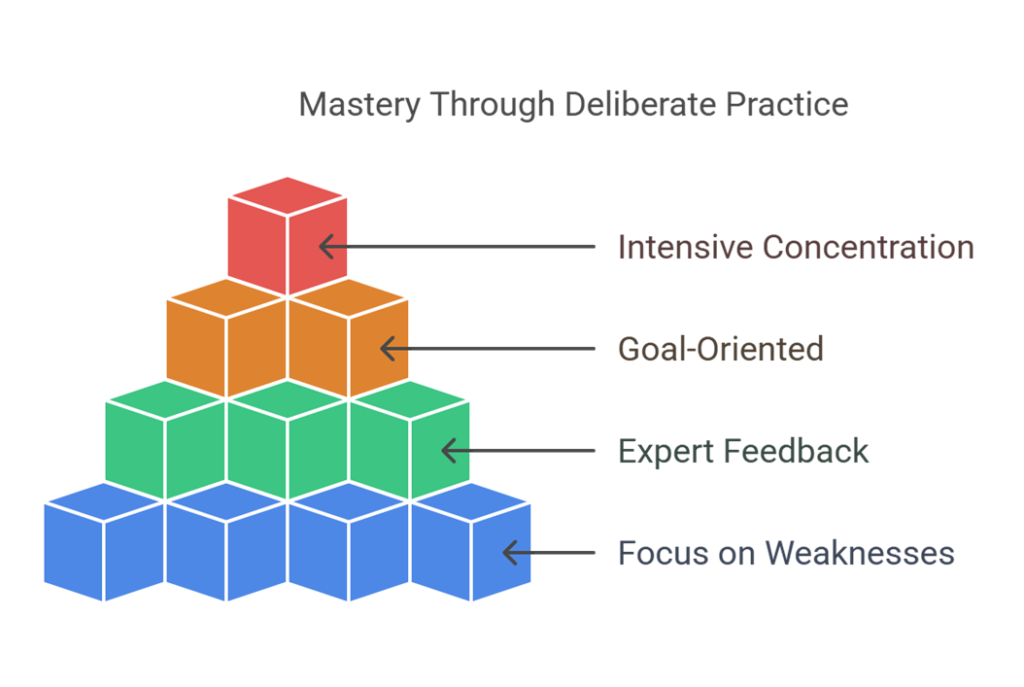
Deliberate practice differs from regular practice in several keyways:
- Focus on Weaknesses: It targets specific areas for improvement rather than reinforcing what you already do well.
- Expert Feedback: It relies on guidance from knowledgeable mentors who can provide constructive criticism.
- Goal-Oriented: It sets measurable, incremental goals that challenge your current capabilities.
- Intensive Concentration: It demands sustained focus and mental effort, often pushing you beyond your comfort zone.
An Anecdote: The “Judgment of Paris”
In 1976, a blind wine-tasting event known as the “Judgment of Paris” shattered the global perception of French wine supremacy. California wines, judged by French experts, scored higher than their French counterparts. Even more surprising, the judges often mistook American wines for French wines and vice versa.
This event highlighted two critical points: assumptions about expertise can be flawed, and even so-called experts need to refine their skills through deliberate feedback and practice.
Why Deliberate Practice Matters
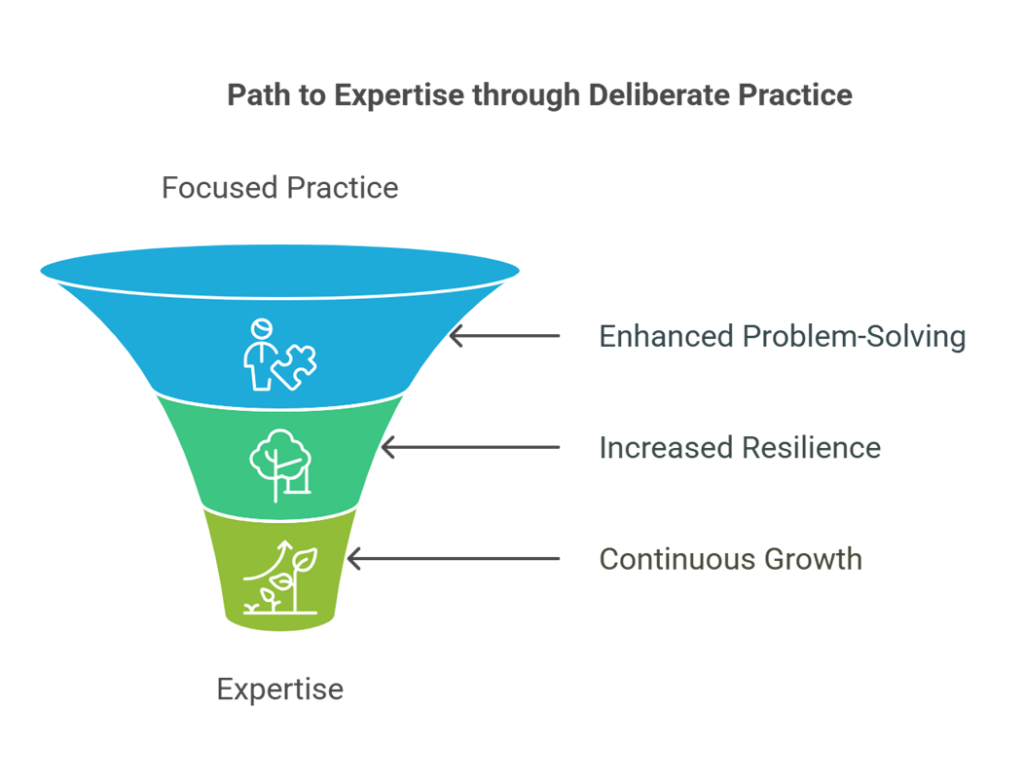
The journey to expertise is neither quick nor easy. It requires at least 10,000 hours—or a decade—of focused practice. While this may seem daunting, deliberate practice offers tangible benefits:
- Enhanced Problem-Solving: By breaking down challenges into smaller, manageable tasks, you learn to approach problems systematically.
- Increased Resilience: Overcoming repeated failures builds mental toughness and adaptability.
- Continuous Growth: Deliberate practice fosters lifelong learning, ensuring you stay ahead in your field.
Actionable Steps to Implement Deliberate Practice
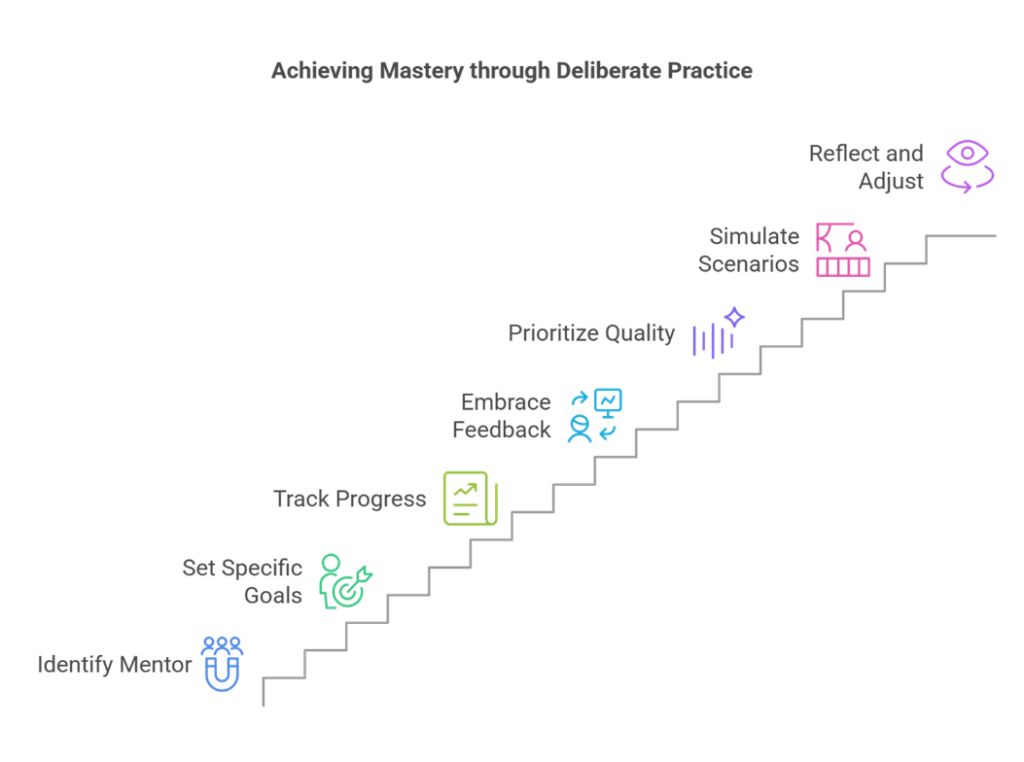
Identify a Mentor
Seek out experienced individuals who can provide constructive feedback. A mentor can accelerate your learning by identifying areas for improvement and offering guidance.
Set Specific Goals
Break your objectives into small, measurable milestones. For example, a musician might aim to perfect a specific piece or technique within a week.
Track Progress
Keep a journal to document your efforts, successes, and areas needing improvement. Regularly reviewing your progress ensures accountability.
Embrace Feedback
Constructive criticism is vital for growth. Actively seek feedback and use it to refine your approach.
Prioritize Quality Over Quantity
Limit practice sessions to 2-4 hours of focused effort daily. Intensity matters more than duration.
Simulate Real Scenarios
Create conditions that mimic real-world challenges. For instance, managers can role-play crisis scenarios to enhance decision-making under pressure.
Reflect and Adjust
After each practice session, evaluate what worked and what did not. Use these insights to plan your next steps.
Lessons from the Masters
Famed golfer Ben Hogan once remarked, “While I am practicing, I am also trying to develop my powers of concentration. I never just walk up and hit the ball.” Hogan’s approach epitomizes deliberate practice—combining physical repetition with mental discipline. Similarly, Winston Churchill honed his oratory skills by practicing speeches in front of a mirror, proving that even charisma can be cultivated.
The Role of Self-Coaching
While external coaches are invaluable, the ultimate goal is to develop self-coaching abilities. Benjamin Franklin exemplified this by reconstructing articles from memory and comparing his versions to the originals. This iterative process of self-assessment and refinement propelled Franklin to become one of history’s greatest thinkers.
The Long Road to Mastery
Achieving expertise is a marathon, not a sprint. Consider violinist Nathan Milstein’s advice: “If you practice with your fingers, no amount is enough. If you practice with your head, two hours is plenty.” High-quality, focused practice yields far greater results than mindless repetition.
The Takeaway: Greatness Is Within Your Reach
The Polgárs, Benjamin Bloom’s research, and countless other examples affirm that expertise is not a gift reserved for the few. It is a result of deliberate practice, perseverance, and a commitment to continuous improvement.
Wherever you are on your journey, remember: the path to mastery begins with a single step. Take that step today by setting a goal, seeking feedback, and embracing deliberate practice. Your potential is boundless; all it takes is the dedication to unlock it.