
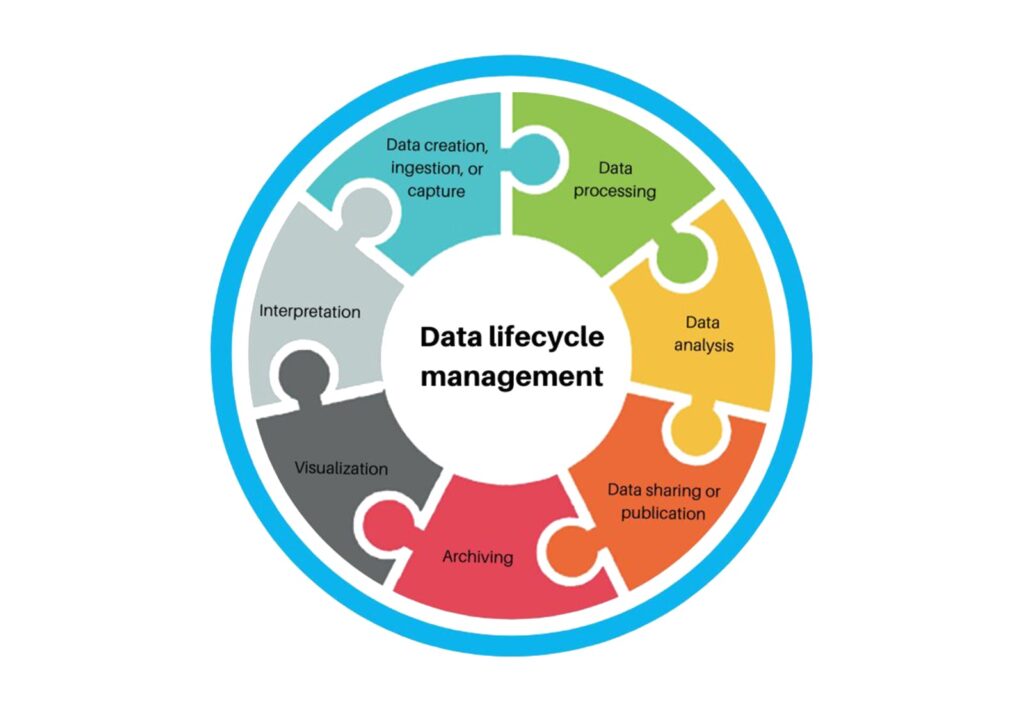
In today’s data-dominated world, understanding the journey of data—from creation to eventual retirement—isn’t just a technical necessity; it’s a strategic keystone for any business’s success.
The Significance of Data Management Across Professions
Navigating the modern digital landscape, data management has grown from being a mere technical requirement to a strategic asset. Every profession, be it healthcare, finance, or marketing, now relies on data to inform and optimize their operations. With advancements like the Internet of Things (IoT) and machine learning, data’s interconnectedness has heightened. Understanding the data lifecycle and its influence on organizational data quality has never been more crucial.
Understanding the Data Lifecycle
While the foundational stages of the data lifecycle remain consistent, they’ve evolved in complexity due to modern challenges like data sprawl, hybrid cloud environments, and advanced methodologies:
- Metadata Management: This provides context to data, ensuring not just storage but understanding of its essence.
- Master Data Management (MDM): This focuses on creating a unified, authoritative view of business-critical data, eliminating disparities and conflicts.
Data Varieties and Their Lifecycles
Differentiating between data types remains a cornerstone of effective data management. Their lifecycles can vary, especially with real-time data streams, historical data archives, and transient data types.
- Hot Data: Beyond daily operations, hot data in modern settings also fuels real-time analytics and immediate decision-making processes. Techniques like in-memory computing are often employed to handle this data efficiently.
- Warm Data: As organizations adopt predictive analytics, warm data isn’t just for occasional reference. It’s actively used for trend analysis, medium-term forecasting, and to inform strategic decisions.
- Cold Data: Even though cold data might seem dormant, it’s crucial for long-term trend analysis, compliance, and retrospective studies. With the advent of data lakes, storing and querying cold data has become more feasible.
The Modern Approach to Data Lifecycle Management (DLM)
DLM’s essence has evolved. While it still covers data’s journey from creation to deletion, modern DLM integrates AI-driven tools for automation, data quality checks, and predictive maintenance. It emphasizes not just data’s physical existence but also its relevance, quality, and compliance over time.
Why Manage the Data Lifecycle?
Alongside preventing misuse and enhancing data availability and integrity, modern DLM also focuses on:
- Data Privacy & Compliance: With regulations like GDPR, ensuring data privacy throughout its lifecycle is paramount.
- Operational Efficiency: Effective DLM ensures data is available, accurate, and optimized for various operations, reducing overheads and inefficiencies.
- Strategic Advantage: In the age of data-driven decision-making, efficient DLM provides a competitive edge by offering timely insights.
The Enhanced Landscape of Data Security
Data security has grown in complexity with the proliferation of cyber threats. Beyond traditional encryption and access control, modern data security also emphasizes:
- Data Lineage & Traceability: Knowing where your data came from and how it has been transformed over time aids in audit trails and compliance.
- Ethical Data Handling: Ethical considerations, especially with sensitive or personal data, dictate how data should be captured, stored, and processed.
In Conclusion
As data continues to be the cornerstone of modern business operations, its management, and security gain paramount importance. The intricate journey of data, from its inception to disposal, is laden with challenges and opportunities. Embracing advanced methodologies, fostering a culture of data awareness, and staying updated with technological advancements are essential for future-ready data management.