

Success is not built overnight. It is the result of small, consistent actions that accumulate overtime. Too often, people believe that changing their lives requires massive, overwhelming efforts. However, research shows that starting small is the most effective way to build habits that last.
The Power of Tiny Habits
Many people set ambitious goals, only to abandon them after a few days. This cycle of setting unrealistic expectations and failing to meet them leads to frustration and self-doubt. Instead, the key to real change lies in making small, manageable adjustments to daily routines. These tiny habits are easier to adopt and sustain, creating a foundation for bigger transformations.
BJ Fogg, a behavior scientist at Stanford University, highlights in his book Tiny Habits: The Small Changes That Change Everything that successful behavior change does not require willpower or motivation alone. Instead, it depends on starting small, anchoring habits to existing routines, and celebrating progress.
An Anecdote: The Story of the Slow Runner
James had always dreamed of becoming a runner, but every attempt to start a workout routine ended in frustration. Each time he tried, he would push himself too hard – running long distances, feeling exhausted, and then giving up within a week.
One day, he decided to take a different approach. Instead of running miles at a time, he started with just one minute of jogging in place after brushing his teeth. It felt so easy that he had no excuse to skip it. Over time, one minute turned into five, then ten, then a full run around the block. A year later, James had completed his first marathon.
This transformation was not the result of a sudden burst of motivation. It was built on the foundation of small, consistent steps that grew into lasting change.
The Science of Habit Formation
For any habit to stick, three key elements must be in place:
- Motivation – The desire to perform the behavior.
- Ability – Making the habit easy to do.
- Prompt – A trigger that reminds you to act.
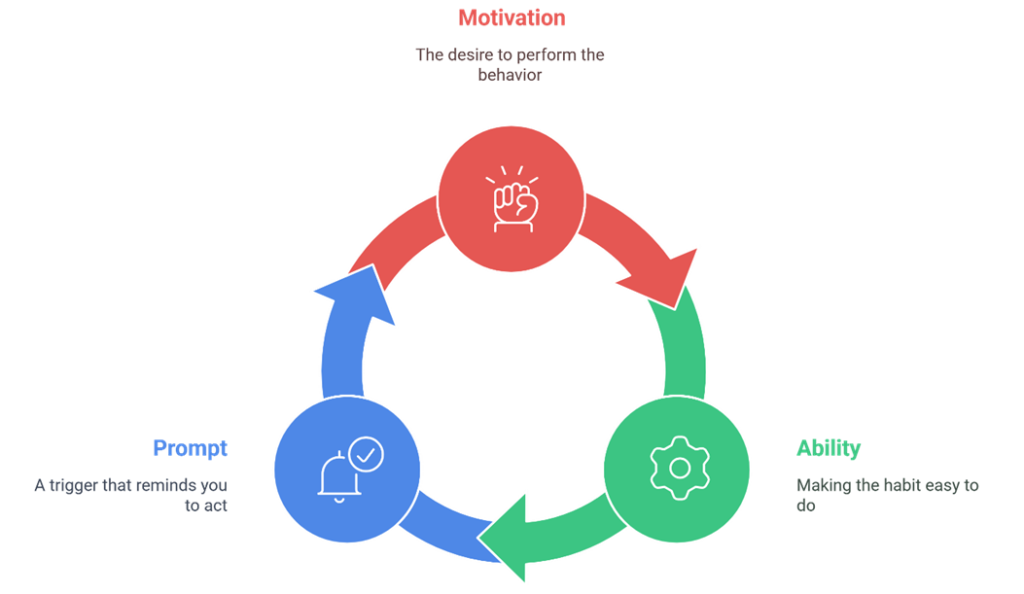
If a habit is difficult, it requires high motivation. However, motivation fluctuates, making it unreliable. The best strategy is to make the habit so easy that motivation is not required.
For example:
- Instead of committing to reading an entire book, start with one paragraph.
- Instead of doing a full workout, start with one push-up.
- Instead of meditating for 20 minutes, begin with three deep breaths.
By lowering the barrier to action, habits become effortless to maintain.
Actionable Steps to Start Tiny Habits
Start Small
Begin with the smallest version of the habit. Make it easy enough that you cannot fail.
- Want to write more? Write one sentence per day.
- Want to eat healthier? Take one bite of a fruit each morning.
- Want to wake up earlier? Move your bedtime 5 minutes earlier each night.
Anchor New Habits to Existing Routines
Attach the habit to something you already do daily.
- After brushing your teeth, do one squat.
- After pouring your morning coffee, take one deep breath.
- After sitting down at your desk, write one goal for the day.
By linking new habits to established behaviors, they become a natural part of your routine.
Celebrate Small Wins
Reinforce habits by associating them with positive emotions.
- Do a fist pump and say, “Yes!”
- Smile and feel proud of your effort.
- Think of a happy song when completing the habit.
Celebrating success—even tiny successes—rewires your brain to associate the habit with positive feelings, making it easier to repeat.
Adjust and Expand Over Time
Once a habit is established, let it grow naturally.
- If you start with one push-up, you may feel motivated to do more.
- If you read one paragraph, you may decide to read a full page.
- If you drink one glass of water, you may increase it to two.
Growth happens organically when habits are easy and rewarding.
Breaking the Myth of Willpower
Many people believe that change requires extreme willpower, but this is false. Willpower is unreliable because it fluctuates based on mood, stress, and energy levels. Instead of relying on motivation, successful people design their environment to make good habits effortless.
- Remove friction: If you want to read more, keep a book on your bedside table.
- Make bad habits harder: If you want to eat less junk food, do not keep it at home.
- Use positive reinforcement: Reward yourself for completing habits, no matter how small.
By making small adjustments to daily life, success becomes inevitable.
The Ripple Effect: How Tiny Habits Lead to Big Change
Once a small habit is in place, it often leads to larger transformations.
- One healthy meal leads to a better diet.
- One minute of exercise leads to a fitness routine.
- One mindful breath leads to reduced stress.
When small habits compound, they create massive change over time. This is the secret behind lasting personal growth.
Final Thoughts: The First Step to a Better You
Creating new habits does not have to be overwhelming. By thinking small, anchoring habits to existing routines, and celebrating progress, anyone can create lasting change. Success is not about making huge leaps – it is about taking one small step at a time. What tiny habit will you start today?