
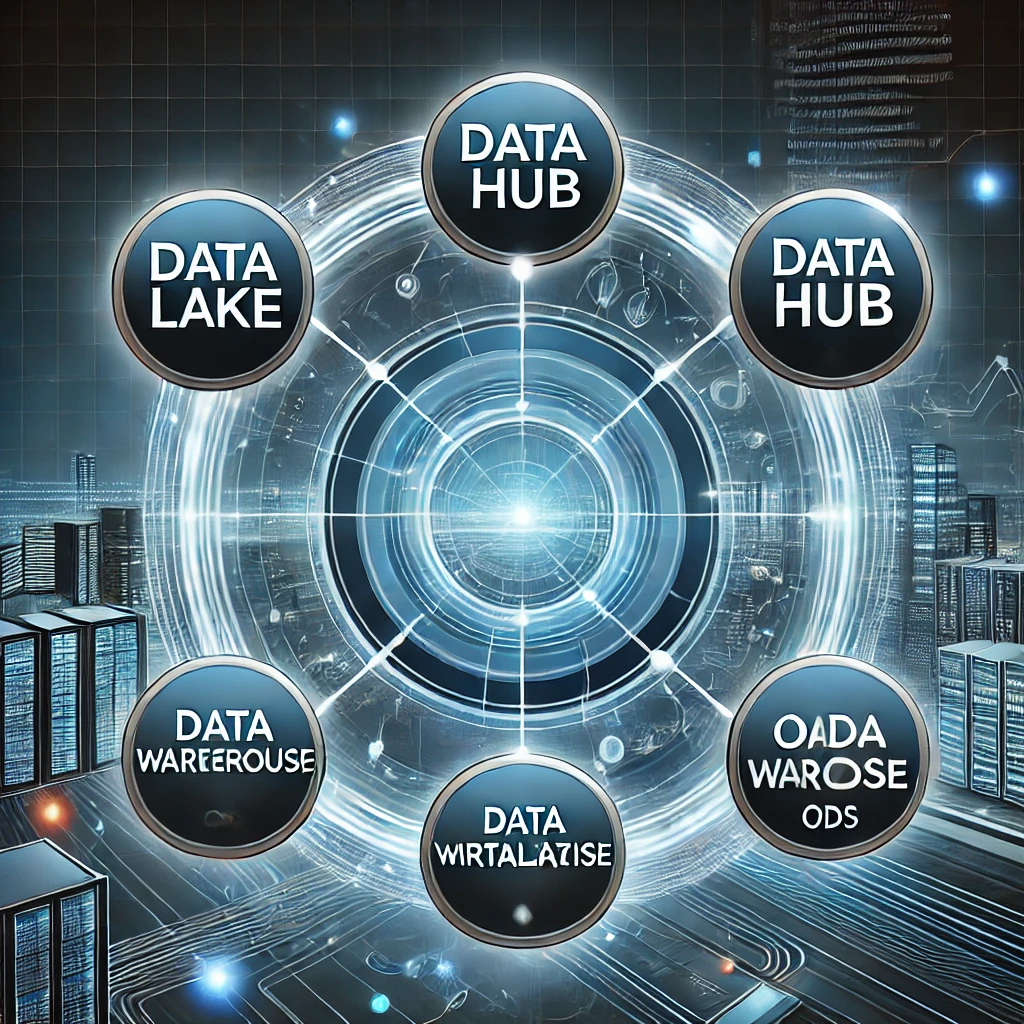
Every enterprise has a story about that pivotal moment when it became clear that its data was scattered across too many systems. Imagine a growing retail chain called “Oceanic Organics.” When it started as a family-owned store, the data was straightforward: a few spreadsheets with monthly sales and inventory details. However, as the chain expanded to multiple locations, introduced e-commerce, and ventured into partnerships with delivery services, data began pouring in from every direction. Different teams stored data in various formats across myriad platforms. Instead of fueling smarter decisions, data threatened to become a roadblock. The solution for Oceanic Organics lay in choosing the right data consolidation patterns.
Just like Oceanic Organics, modern enterprises grapple with diverse data challenges. The data ecosystem has grown more complex, and with that complexity comes the need to consolidate data in a manner that is scalable, efficient, and cost-effective. Over time, five major data consolidation patterns have emerged as the pillars of modern data architecture:
- Data Lakes
- Data Hubs
- Data Virtualization (or Data Federation)
- Data Warehouses
- Operational Data Stores (ODS)

While it might be tempting to assume that only one of these patterns is sufficient, the reality is often more nuanced. Different parts of an enterprise might benefit from different consolidation solutions. In some cases, an organization might even require all five at once, each serving a specific purpose. In this blog, we will explore each of these patterns, compare them, and discuss when to use (and when not to use) each. Ultimately, the goal is to empower you to make informed decisions for your enterprise, acknowledging that more than one pattern may be required for holistic data management.
1. Data Lakes
Introduction
A Data Lake is akin to a massive reservoir of raw information, stored in its native format until it is needed. The primary design principle is to store everything—structured, semi-structured, and unstructured data—without strict schemas or transformations upfront. This contrasts with traditional approaches where data is cleaned and pre-structured before storage.

When to Use
- Big Data Analytics: If your organization handles large volumes of streaming data (e.g., Internet of Things sensors, social media feeds), Data Lake provides a cost-effective and scalable repository.
- Data Science and Machine Learning: Data Scientists often need raw data to apply advanced analytics, machine learning models, and exploratory analysis. Data Lake supports iterative data exploration without rigid schema constraints.
- Unstructured Data: For data types such as videos, images, or logs, Data Lakes offer a straightforward, minimal-organization approach.
When Not to Use
- Immediate Business Reporting: Because Data Lakes do not impose structure upfront, retrieving business intelligence (BI) dashboards or generating financial reports can be cumbersome.
- Complex Data Governance: If you require strict governance, clear ownership, and robust data quality guarantees, a Data Lake alone might not be enough. Schema-on-read can be too flexible in heavily regulated industries.
2. Data Hubs
Introduction
Data Hubs are designed to act as a central point for data integration and dissemination. A Data Hub may apply transformations, validations, and standardization rules before pushing the data to various systems or before sending it to a data store. Unlike a Data Lake, a Data Hub usually imposes certain data models or structures to ensure consistency.

When to Use
- Master Data Management: When ensuring high data quality and consistency of key data entities (such as customer, product, or supplier records) is essential, a Data Hub is often used to unify and cleanse data from different sources.
- Real-time or Near Real-time Data Exchange: If multiple systems need immediate access to standardized data—think supply chain updates, order processing, or financial transactions—a Data Hub can help synchronize and enrich data on the fly.
When Not to Use
- Highly Specialized Data Analysis: A Data Hub is primarily for data distribution rather than complex analytical processing. If you need to run sophisticated analytics on massive unstructured data, a Data Lake or Data Warehouse might be more fitting.
- One-off Integrations: If data only needs to move once or infrequently, building a Data Hub may be overkill. Lightweight data pipelines could suffice.
3. Data Virtualization (or Data Federation)
Introduction
Data Virtualization (also known as Data Federation) is a pattern that gives a unified view of data without physically moving or copying it into a single repository. It creates a virtual data layer that abstracts the underlying data sources. Users can query data as if it were in one place, even though it may be scattered across multiple systems.

When to Use
- Real-time Access to Multiple Data Sources: If your organization needs to integrate on-demand data from multiple platforms—like CRM, ERP, and external APIs—Data Virtualization can create a single query interface.
- Rapid Prototyping: Data Virtualization allows quick modeling of unified data views without waiting for heavy Extract-Transform-Load (ETL) processes, thus accelerating proof-of-concept projects.
- Cost Optimization: By avoiding additional storage and replication, Data Virtualization can reduce infrastructure overhead, especially in situations where data usage patterns are variable.
When Not to Use
- Massive Batch Processing: Virtualization struggles with very large volumes of historical or streaming data. Physical consolidation in a Data Warehouse or Data Lake might be more appropriate for big data analytics.
- Complex Transformations: Data Virtualization excels at providing unified views but can become complex and slower if the data requires intensive transformations or complex joins.
4. Data Warehouses
Introduction
A Data Warehouse is a central repository for structured and often time-variant data. It typically uses well-defined schemas (e.g., star or snowflake schemas), making it easier for business analysts to run queries and generate standardized reports. It is the traditional backbone of enterprise reporting, analytics, and business intelligence.

When to Use
- Business Intelligence and Reporting: Financial dashboards, annual reports, and corporate metrics are usually delivered from a Data Warehouse. It is optimized for read-heavy queries on historical data.
- Regulatory Compliance: The structured approach of a Data Warehouse makes it easier to maintain compliance with regulations, as data lineage and audit trails are typically clearer.
- Historical Trend Analysis: Data Warehouses store snapshots of data over time, enabling robust trend analysis.
When Not to Use
- Unstructured Data: Data Warehouses excel with structured data. If much of your data is logs, documents, or media, forcing these into structured schemas can be cumbersome.
- Ad-hoc or Exploratory Analysis: In Data Warehouses, schema definitions and transformations are done beforehand. This can slow down experimentation when data is constantly evolving or has unpredictable structures.
5. Operational Data Stores (ODS)
Introduction
An Operational Data Store (ODS) is a consolidated view of operational data from various transactional systems, generally used for real-time or near-real-time reporting. It sits between operational systems and analytical repositories like Data Warehouses. An ODS usually contains more current data than a Data Warehouse and is designed for quick updates.

When to Use
- Real-time Operational Reporting: When executives or operational teams need daily or hourly metrics without waiting for overnight ETL batches to update a Data Warehouse.
- Data Synchronization: In scenarios where, multiple operational systems need a unified and consistently updated dataset, an ODS can serve as an integration layer.
When Not to Use
- Long-term Storage: ODS is not typically for archiving historical data; it focuses on the short-term snapshot of operational data.
- Complex Analysis: Detailed trend analysis, historical data mining, or advanced analytics are not the primary focus of an ODS. A Data Warehouse or Data Lake is more suitable for those tasks.
Comparing the Five Patterns

The primary differences between these patterns revolve around the level of structure, purpose, typical data types, and whether data is physically moved or only virtually accessed.
- Data Lakes: Great for storing unstructured and large volumes of data, with minimal upfront modeling. Less suitable for immediate, high-performance reporting or strict governance.
- Data Hubs: Central integration layer that standardizes and distributes data, often used for master data management or synchronization across systems.
- Data Virtualization: Focuses on providing a single view without moving data. Optimal for real-time access across heterogeneous systems but can struggle with massive analytical workloads.
- Data Warehouses: Best suited for structured, historical, and business-critical reporting. It might be too rigid for rapidly changing or highly unstructured data.
- Operational Data Stores: A short-term snapshot of operational data for near-real-time reporting and synchronization. Not ideal for deep historical or complex analytical queries.
Choosing the Right Approach (and Why You May Need More Than One)
Selecting a single data consolidation pattern might be insufficient for modern enterprises. Take Oceanic Organics as an example:
- The marketing department wants to run advanced analytics on social media mentions and clickstream data. They would likely use Data Lake to handle this unstructured big data.
- The finance team needs an authoritative source for monthly P&L statements based on historical, structured data. A Data Warehouse is crucial for this purpose.
- The supply chain team wants real-time updates on inventory across multiple regional warehouses, so they might rely on an Operational Data Store (ODS) to track the current state of stock levels.
- The master data management initiative aims to unify and clean product data across all systems, suggesting the use of a Data Hub.
- For on-demand data querying from partners’ databases without heavy ETL processes, Data Virtualization can enable real-time insights.
In a single enterprise, different groups may require different patterns. For instance, the marketing team might prefer a schema-on-read approach in Data Lake, while financial stakeholders insist on a highly governed Data Warehouse. Ultimately, the choice depends on factors such as data volume, data variety, speed requirements, cost considerations, and governance mandates.
Potential Combinations
- Data Lake and Data Warehouse:
- A common architecture pattern known as a “Lakehouse” approach, where raw data lands in the Data Lake, and refined, aggregated data moves into the Data Warehouse for reporting.
- Balances the flexibility of the Data Lake with the reliability of a Data Warehouse.
- Data Hub and ODS:
- Data Hub standardizes and cleans data, and the ODS continuously updates and provides an up-to-date snapshot for operational systems.
- Ensures data consistency and immediate availability for real-time use cases.
- Data Virtualization Layer Over a Data Lake:
- If certain analytics or data integration tasks do not require physically moving data, a virtualization layer can tap into the Lake directly.
- This helps reduce duplicate storage and speeds up certain exploratory queries.
When to Avoid Certain Combinations
- Data Hub with Data Virtualization Alone: While it is technically feasible, relying exclusively on Data Virtualization over a Hub can complicate transformations, especially if the Data Hub is already in place to ensure standardization. Adding a virtualization layer might create unnecessary complexity unless the use case specifically demands real-time queries across multiple sources.
- Data Warehouse with ODS for Long-term Analytics: An ODS is not designed for deep historical analysis, so feeding an ODS with the intent to store data long-term could muddy the architecture. Instead, use an ODS as an intermediary layer and then push the relevant data to the Warehouse for long-term storage.
Conclusion
Data consolidation is an ever-evolving challenge in modern enterprises. From Data Lakes to Data Hubs, Data Virtualization, Data Warehouses, and Operational Data Stores, each pattern addresses specific needs. The choice depends on your organization’s goals, data types, regulatory environment, and analytical requirements. In many cases, adopting multiple patterns is the most pragmatic approach—do not hesitate to implement more than one if the use cases justify it.
In the story of Oceanic Organics, each team discovered that having the right data consolidation pattern saved time, reduced cost, and provided strategic insights that propelled business growth. Whether it is streaming sensor data landing in a Data Lake for AI-driven insights or a meticulously managed Data Warehouse for quarterly finance reports, the right architecture ensures that data is an asset rather than a bottleneck.
For more such data-oriented blogs, please visit: https://manasjain.com/data-archi-talks-blogs/