Data Archi Talks

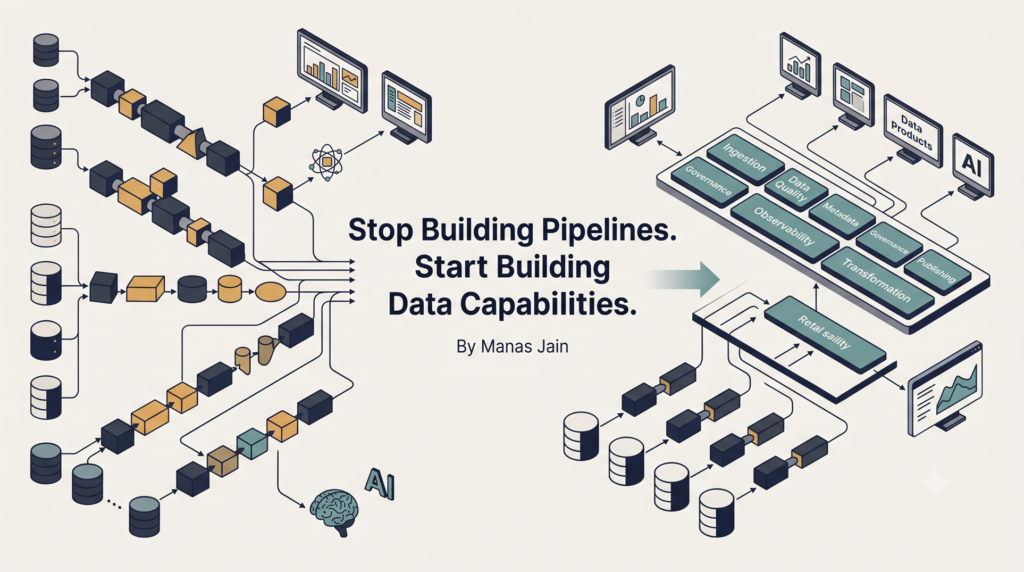
Fragmented data pipelines transforming into a modular architecture of reusable ingestion, quality, metadata, governance, observability, transformation, and publishing capabilities.

Stop Building Pipelines. Start Building Data Capabilities.

Data teams often rebuild the same ingestion, quality, governance, and monitoring foundations for every new pipeline. This practical guide shows how to replace repeated engineering with reusable data capabilities, standardize outcomes without restricting teams, and prove the approach through a focused 30–60–90 day implementation plan.

Stop Building Pipelines. Start Building Data Capabilities. Read More »
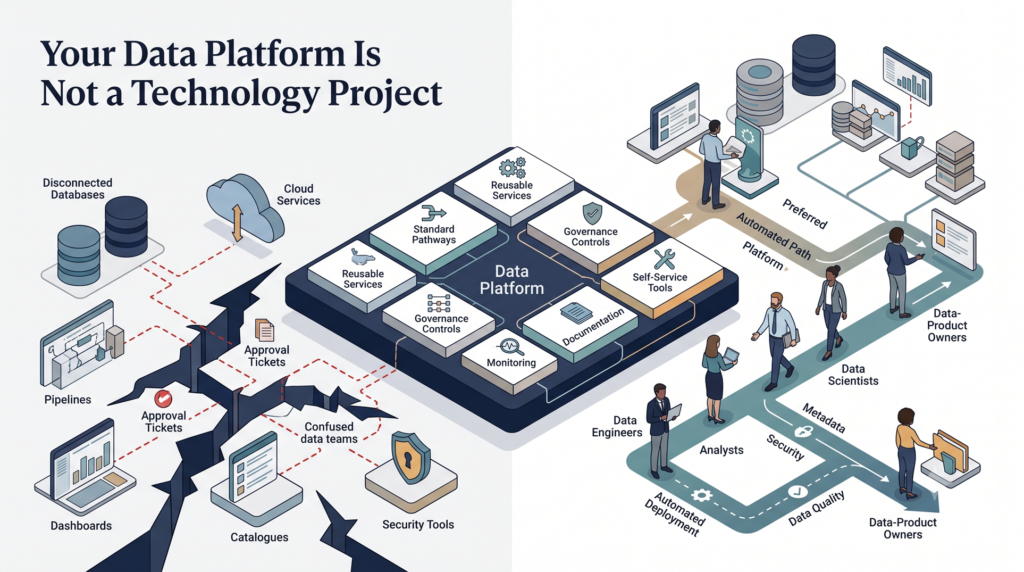
Editorial illustration contrasting a fragmented collection of data tools with a well-organized, self-service data platform.

Your Data Platform Is Not a Technology Project.

A modern data stack does not automatically create a modern data platform. This article explains how data leaders can reduce delivery friction, build practical paved paths, embed governance, clarify ownership, and measure real adoption. It also provides a focused 90-day plan for turning disconnected technologies into a platform that teams can use effectively.

Your Data Platform Is Not a Technology Project. Read More »

7 Most Common ETL Developer Mistakes You Must Avoid

ETL processes are critical for ensuring reliable data warehouses, yet common mistakes can compromise their effectiveness. This blog identifies seven prevalent errors ETL developers face, including using incorrect date functions, skipping essential data profiling, mishandling duplicate records, and misunderstanding the importance of technical versus business dates. Detailed solutions accompany each mistake to help developers optimize and secure their data pipelines.

7 Most Common ETL Developer Mistakes You Must Avoid Read More »

Top 6 Essential Features of a Modern Data Catalog

Top 6 Essential Features of a Modern Data Catalog

In today’s data-driven world, effective data management has emerged as a cornerstone for organizational success. Companies are increasingly relying on data catalogs to help their teams efficiently discover, understand, and utilize data. A robust data catalog significantly boosts productivity, encourages informed decision-making, and fosters a data-literate culture. Here are six essential features that every enterprise should consider when implementing a data catalog.

Top 6 Essential Features of a Modern Data Catalog Read More »

Unlocking Innovation: The Vital Role of Data Engineering in Analytics

Behind every successful analytics project lies a powerful force—data engineering. Often overshadowed by the glamour of data science, data engineering is the backbone that transforms fragmented, messy data into actionable insights. Discover why prioritizing robust data engineering can propel your organization from struggling with legacy systems to confidently driving innovation and business growth.

Unlocking Innovation: The Vital Role of Data Engineering in Analytics Read More »

The 5 Data Consolidation Patterns: A Comprehensive Guide for Modern Enterprises

In the rapidly evolving world of data-driven business, finding the right method to consolidate information can be both a challenge and an opportunity. This blog explores the five essential data consolidation patterns—Data Lakes, Data Hubs, Data Virtualization, Data Warehouses, and Operational Data Stores—and shows how each can address distinct use cases. By drawing on real-world scenarios and providing clear comparisons, it highlights why organizations often need more than one approach. Readers will gain insight into the strengths and limitations of each pattern, ultimately learning how to craft a flexible, cost-effective, and future-proof data architecture.

The 5 Data Consolidation Patterns: A Comprehensive Guide for Modern Enterprises Read More »

Scroll to Top